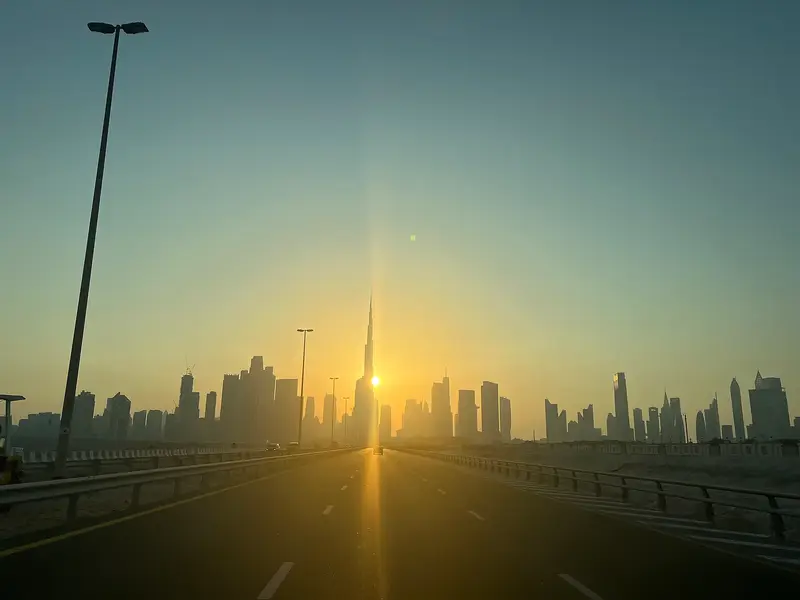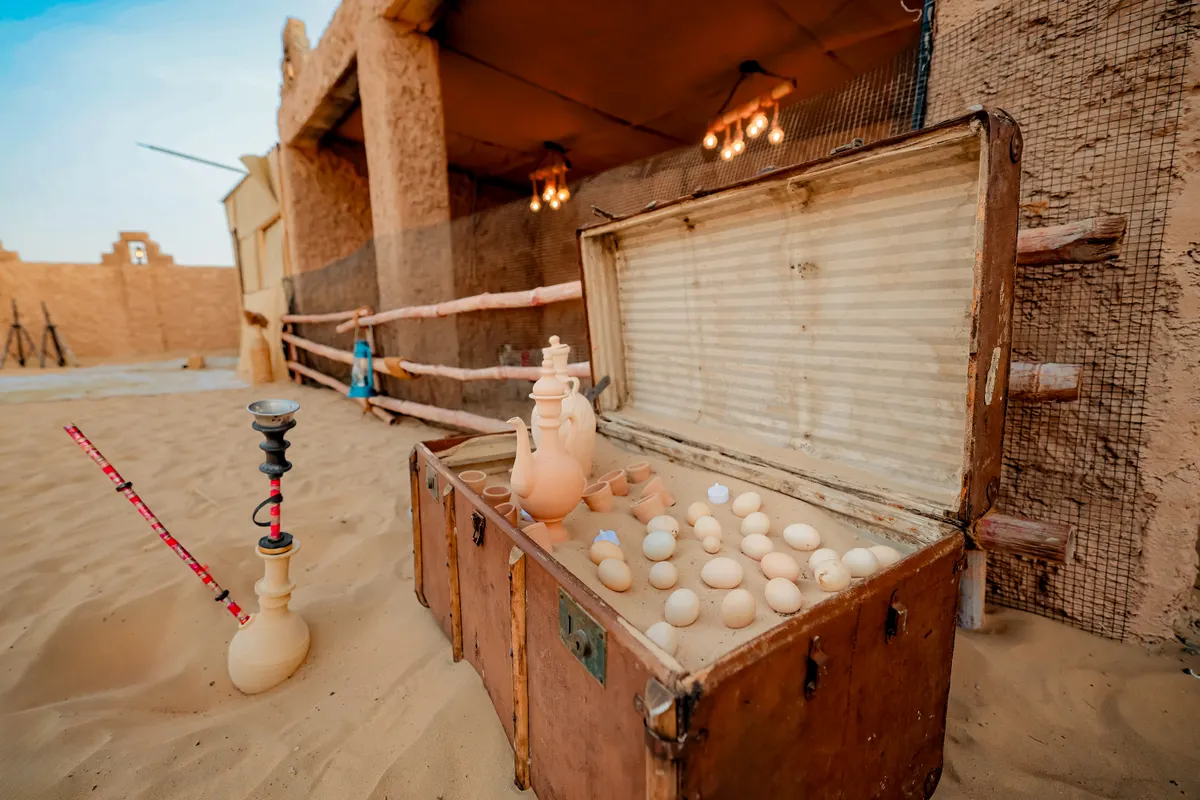
The old Dubai around the Creek is the city before the towers: an abra crossing, the Gold and Spice Souks in Deira, and the wind towers and courtyards of Al Fahidi Historical Neighbourhood. It is best done on foot in the late afternoon of a cool-season day.
A route that works
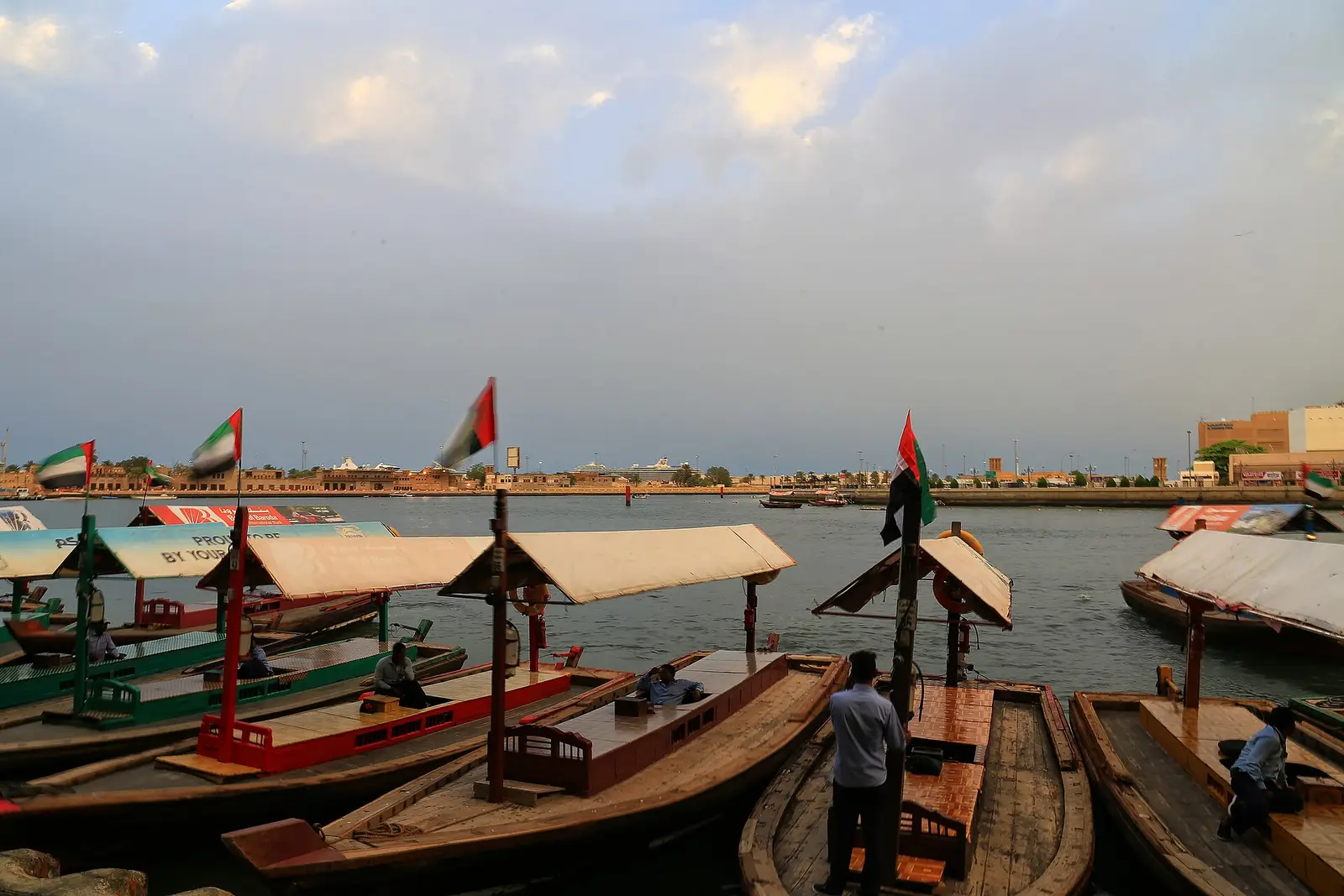
Start on the Bur Dubai side in Al Fahidi Historical Neighbourhood, a restored district of coral-and-gypsum houses topped with wind towers, now galleries, cafés and small museums. Walk down to the Creek, take an abra, the wooden water taxi, across to Deira (the crossing costs only a very small fare, which the RTA sets), and spend the golden hour in the Spice Souk and Gold Souk. Finish with dinner on either bank.
Practical notes
Go from November to March, late in the day. Wear flat shoes and expect to walk on uneven stones. Souk prices are negotiable; do not feel obliged to buy. In Al Fahidi, the Sheikh Mohammed Centre for Cultural Understanding has run guided walks and Emirati meals, which are a good way to hear how people lived here; check availability and booking.
The abra can be crowded at weekends. If you want a quieter crossing, go outside the evening rush.
Pairing it
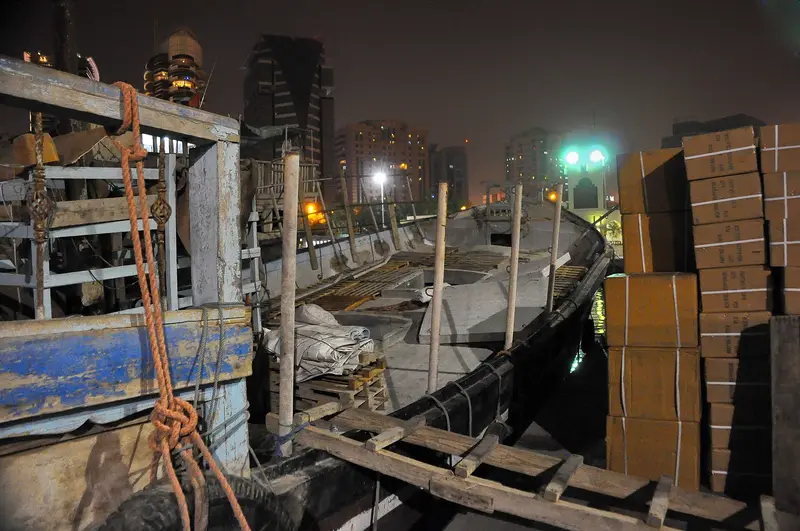
Old Dubai makes a good contrast to the Marina and Downtown in the same day. A traditional dhow cruise on the Creek is the evening version of the same neighbourhood, though most of them are dinner buffets. The best food is on the streets behind the souks rather than on the cruise.
Questions people ask
How much is an abra ride on Dubai Creek?+
Public abras charge a very small fare set by the RTA, and it is paid in cash or with a Nol card.
What is Al Fahidi Historical Neighbourhood?+
A restored area of old Dubai houses with wind towers, now holding galleries, cafés and small museums.
Photo: Iwona Rege, CC BY-SA 4.0